Event guide
Europe concert and festival calendar: what is on, where, month by month
Europe's music season runs all year, but each month puts a different city in the spotlight. Here is which cities to watch, and how ticket sales actually work.
FlyVentis editör ekibi tarafından hazırlanmış, seyahat ve etkinlik bilgileri düzenli olarak gözden geçirilen rehber.
Live music in Europe does not squeeze into a single season. Summer is the large outdoor festivals; autumn and winter are arena tours and the classical season. Knowing that rhythm affects both your chance of finding a ticket and what you pay for flights and hotels — because a city's most expensive weekend is usually the weekend of its biggest event.
The calendar below focuses on repeating seasonal patterns rather than named acts. Artists and line-ups change every year; which month piles up which kind of event stays largely the same.
Winter: arena tours and the classical season
January - February
The quietest travel period of the year is also the richest for indoor events. Big arena tours concentrate in hubs such as London, Berlin, Amsterdam, Paris and Cologne. In Vienna, Berlin and Amsterdam the classical and opera season is running at full tilt. Flight and hotel prices are at their lowest of the year, so even a 2-3 night city break for a single concert makes solid budget sense.
- Cities to watch: London, Berlin, Vienna, Amsterdam, Paris, Cologne
- Upside: lowest flight and hotel prices, uncrowded museums
- Downside: short daylight, limited outdoor programme
March
The last month of the indoor season, and the point at which summer-festival ticket sales speed up. If you have a summer plan, March is the month to buy; early-bird tickets usually sell out in this window. For a city trip you can still catch low-season prices.
Spring: the season opens and city festivals begin
April - May
As the weather improves, outdoor programmes open. This stretch is less about the giant music festivals and more about city festivals, arts events and season openers. European football also hits its peak: league finales, cup finals and European knockout ties all fall in these months, which makes it the busiest window of the year for sport-led travel.
- Cities to watch: Barcelona, Seville, Amsterdam, Copenhagen, Lisbon, Prague
- Upside: mild weather, prices below the summer peak
- Watch for: short price spikes on long holiday weekends
Summer: the big outdoor festivals
June - August
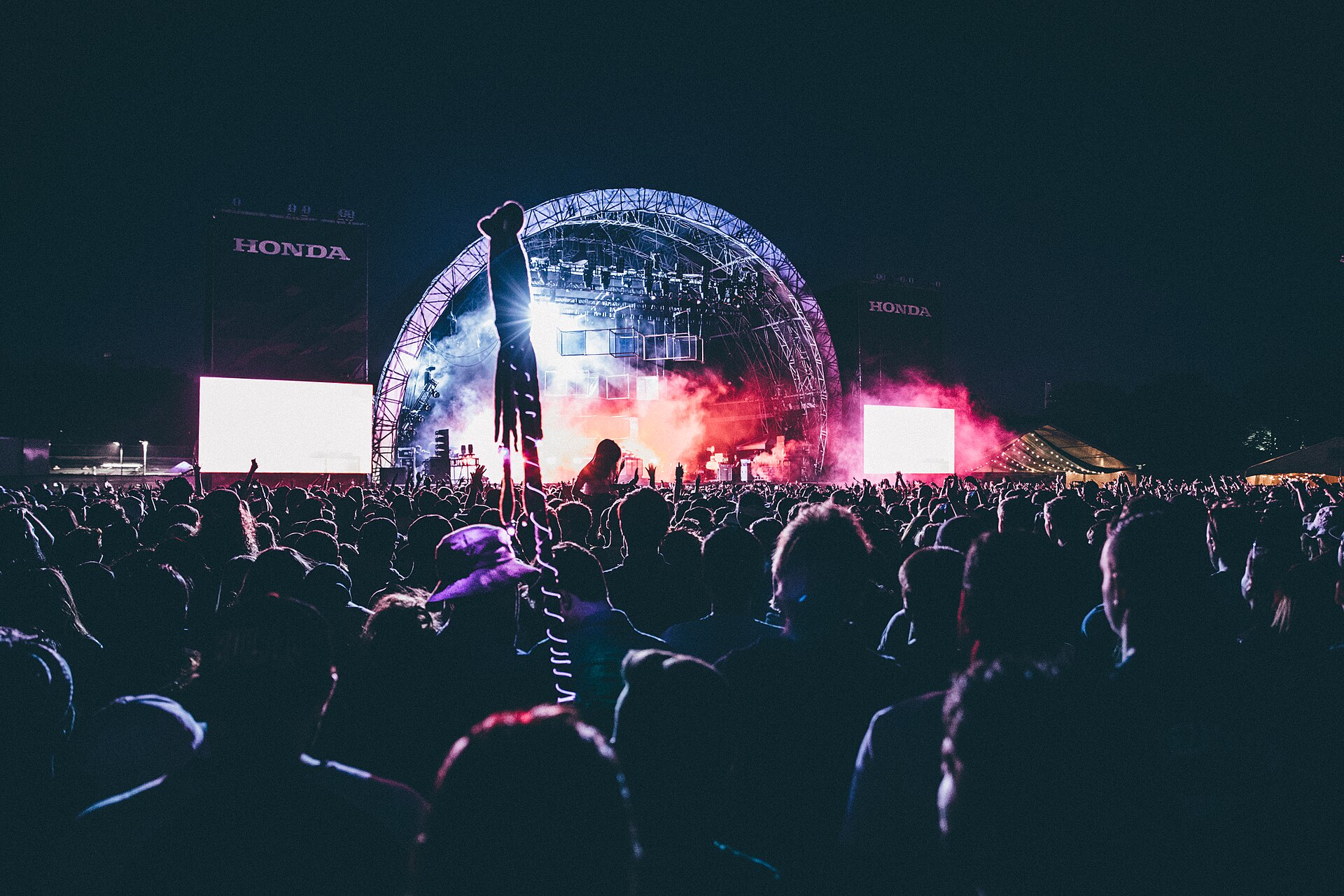
The heart of Europe's festival season. From mid-June to the end of August there is a major outdoor festival almost every weekend. The defining feature of this period is not the festival itself so much as how expensive everything around it becomes: hotel prices in that city can double or triple on the festival weekend, and flights into nearby airports fill up.
- Regions to watch: the Netherlands and Belgium (electronic), the UK and Ireland (rock and indie), Spain and Portugal (city festivals), Central Europe (large mixed-genre festivals), Scandinavia (midsummer-night festivals)
- Upside: the richest programme, long daylight
- Downside: the year's highest flight and hotel prices, and the crowds to match
Autumn: the most balanced stretch of the year
September - October
For many travellers this is the best window of the year. The summer crowds have thinned, prices have come down, and the programme is still rich. City festivals continue while arena tours start their autumn leg. Football leagues are under way and the European group stage begins, so catching both a concert and a match in the same weekend is realistic.
- Cities to watch: Munich, Barcelona, Lisbon, Rome, London, Milan
- Upside: mild weather, reasonable prices, a dense programme
- Watch for: hotel prices can double on weekends with a major city festival
November - December
November is consistently among the cheapest months to travel, and arena tours are running at full speed. In December, Central Europe's Christmas markets take over; Vienna, Prague, Budapest, Strasbourg and German cities take on a completely different atmosphere. Prices rise quickly from mid-December, so late November through the first half of December is the sweet spot.
| Period | Dominant event type | Price level |
|---|---|---|
| January - February | Arena tours, opera, classical music | Lowest |
| March | Indoor concerts, festival ticket sales | Low |
| April - May | City festivals, football season finale | Mid |
| June - August | Large outdoor festivals | Highest |
| September - October | Tours + league matches + city festivals | Mid |
| November | Arena tours | Low |
| December | Christmas markets, New Year programmes | Mid to high |
How ticket sales actually unfold
Event tickets do not go on sale in a single moment; they usually open in several waves. Knowing those waves means you should not give up the moment you see "sold out".
- Presale: via a fan club, the artist's mailing list or a bank/operator deal, 1-3 days before general sale.
- General sale: the largest stock opens here and can sell out in minutes on popular events.
- Extra dates and capacity releases: if demand is high a second date is added, or new blocks open as the stage plot is confirmed.
- Last-week returns: cancellations 1-2 weeks before the event go back onto the official platform. It is the most productive window most people never look at.
Read the calendar together with airfares
An events calendar is not enough on its own; how you get there that weekend is part of the plan. As a rule, Tuesday, Wednesday and Saturday departures are cheaper than Friday and Sunday. If it is a major festival weekend, arriving on the Thursday — the day before — can make a visible difference compared with arriving on the Friday.
Turn the calendar into a plan
Frequently asked questions
When does festival season start in Europe?
The large outdoor festivals usually start in mid-June and run through the end of August. May and September are transition months, when city festivals and indoor events take the lead.
The concert is sold out — what should I do?
Wait for cancelled bookings to return to the official platform 1-2 weeks before the event. Also look at another European stop on the same tour; tickets are usually much easier to find in the second and third cities.
Which month is cheapest for an event trip?
January, February and November are when flight and hotel prices are at their lowest, and arena tours are running at full speed in those months. If budget comes first, plan an indoor concert rather than an outdoor festival.
Where should I stay for a festival?
Hotels closest to the site fill first and jump in price the fastest. A neighbourhood or neighbouring city 30-60 minutes away on public transport is often both cheaper and more useful for the rest of the trip.