

Marienplatz
Ideal: Ideal for first-time Munich visitors and lovers of city squares and classic Bavarian atmosphere.
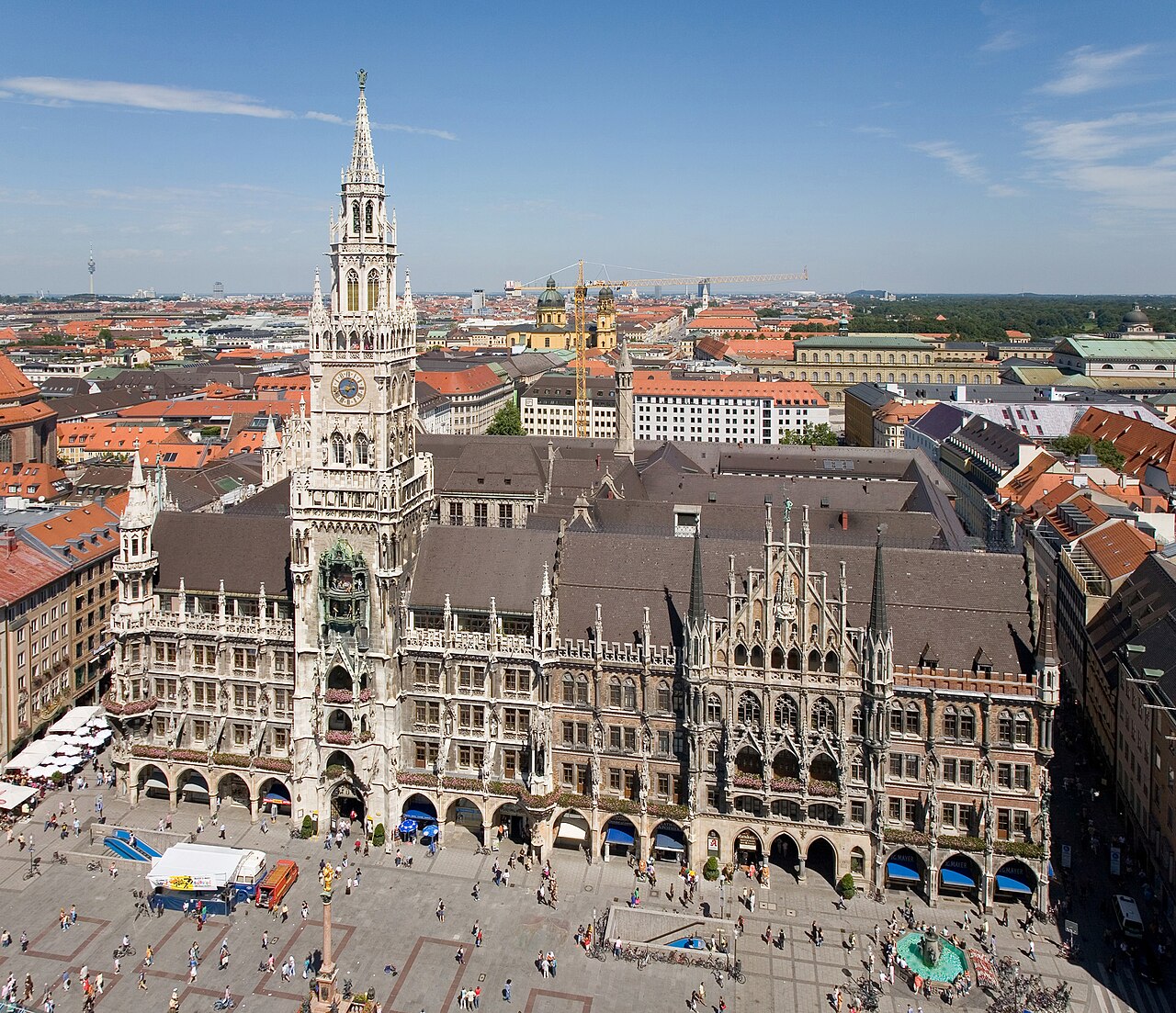
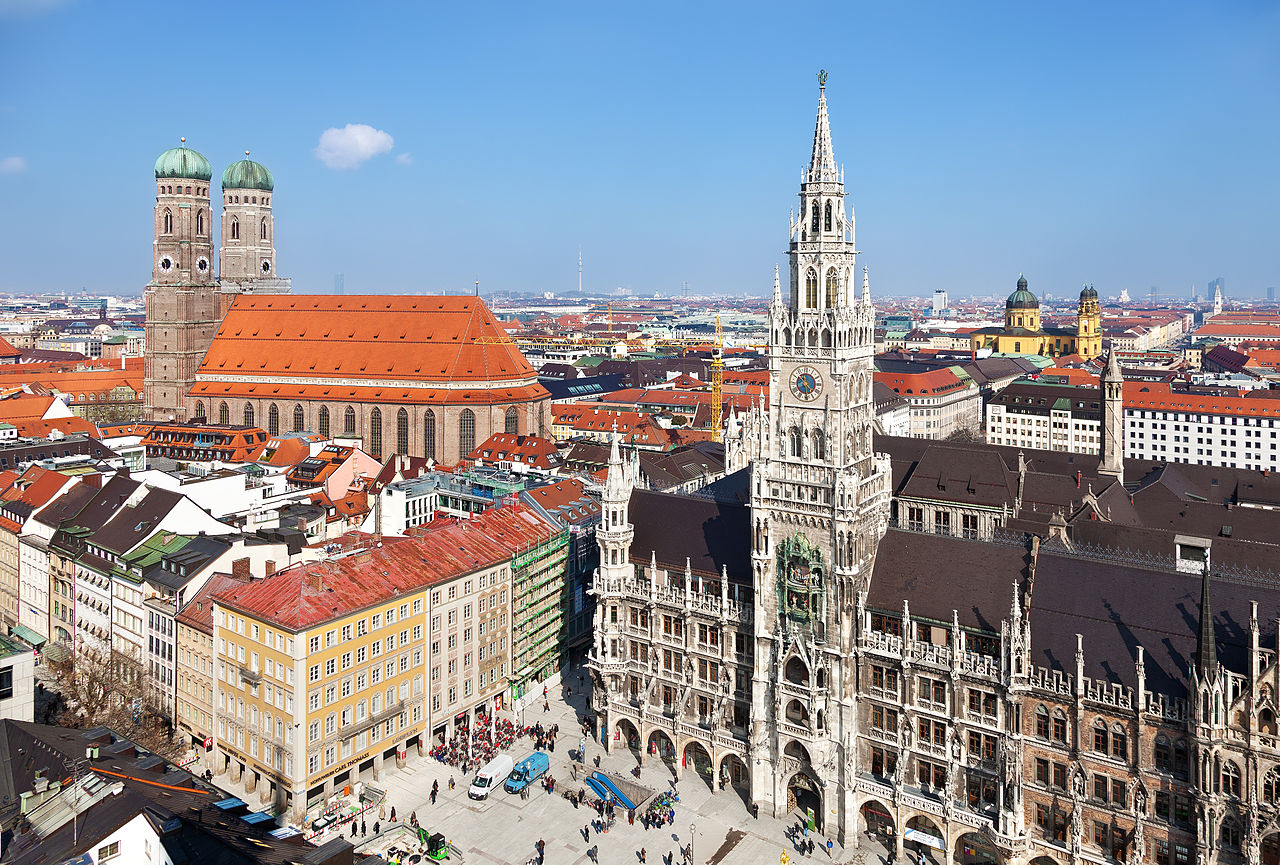
The square takes its name from the Marian column erected in 1638 after the end of Swedish occupation. The neo-Gothic Neues Rathaus was built from 1867 to 1908, and the Glockenspiel on its façade features 43 bells and 32 figures: the upper tier re-enacts Duke Wilhelm V's 1568 wedding and joust, the lower tier the coopers' dance that drew people into the streets after the 1517 plague. The show starts at 11:00 and 12:00, with an additional 17:00 performance in summer, and lasts fifteen minutes.
Did you know?
What is the Rathaus-Glockenspiel actually acting out?
Its 32 figures perform a two-tier show: on top, the 1568 wedding of Duke Wilhelm V with a knights' joust; below, the coopers' dance celebrating the end of the 1517 plague. The whole thing runs about 12–15 minutes.
Why was the column in the square erected?
The Mariensäule was raised in 1638 in thanks for Munich surviving the Swedish occupation during the Thirty Years' War intact. Distances in Bavaria are officially measured from this column.
How old is the Gothic-looking New Town Hall really?
The Neues Rathaus is neo-Gothic rather than Gothic — it was built between 1867 and 1908. The genuinely old building is the Altes Rathaus next door, dating from the 15th century.
Why go?
- To see Munich's historic main square and town hall
- To watch the Rathaus-Glockenspiel performance
- To start an old-town walk from a central, lively hub
Travel tip
Check Glockenspiel times and be on the square accordingly.