Flight tips
Ear pressure and sinus pain when flying
Problems are most likely when the eustachian tube is blocked during rapid cabin-pressure changes.
Prepared by the FlyVentis editorial team and regularly reviewed for travel and event accuracy.
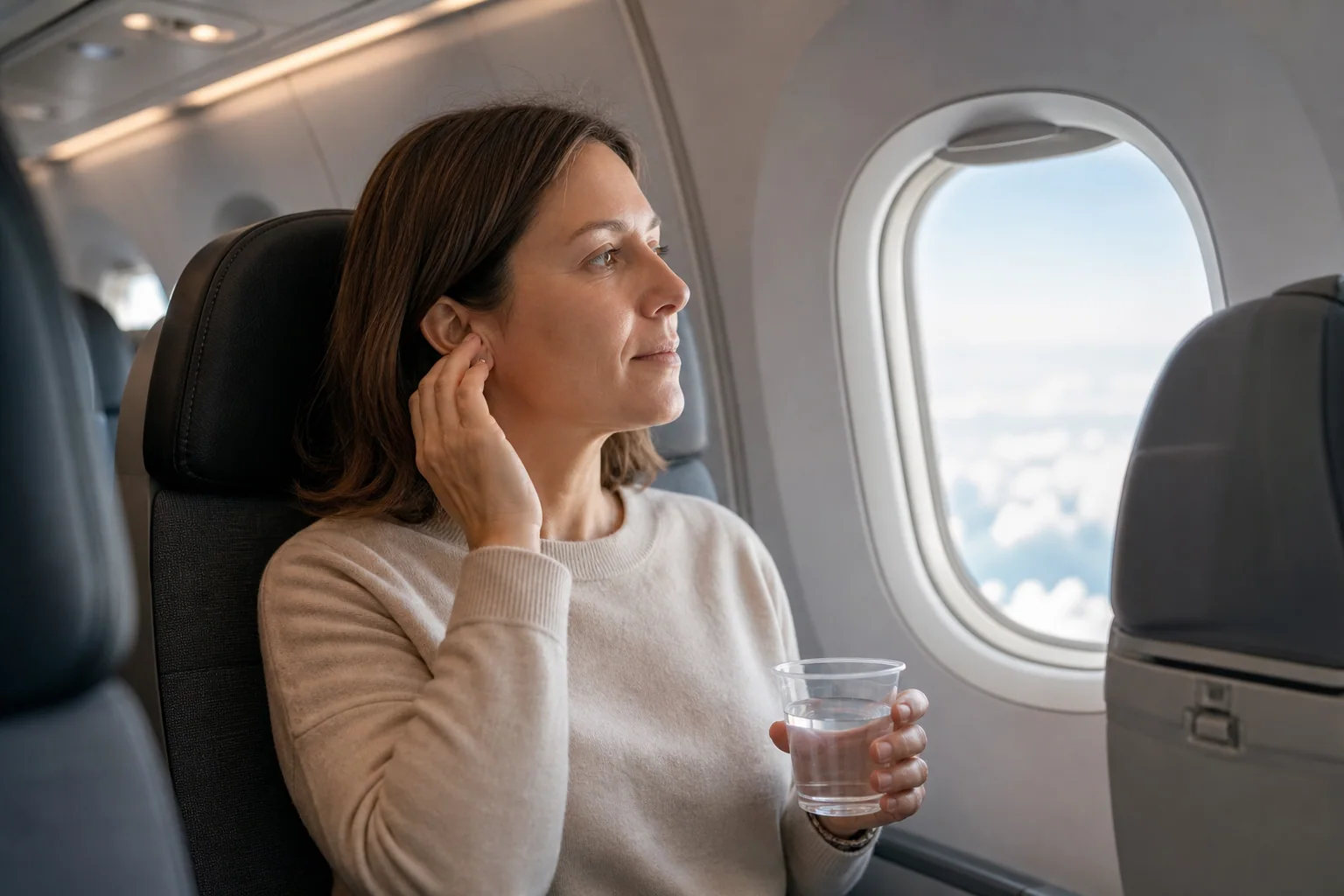
Barotrauma occurs when pressure in an air-filled body space cannot equalise with the aircraft cabin. It most often affects the middle ear during ascent and descent.
Simplify the day with the airport timing guide and use the flying with children guide when relevant.
Stay active during pressure changes
Swallowing, yawning or chewing can encourage natural equalisation. Stay awake during descent and avoid forceful pressure manoeuvres.
Practical checklist
- Stay awake during descent.
- Swallow or yawn regularly.
- Plan age-appropriate sucking for infants.
- Reconsider flying with severe congestion.
When to seek care
Persistent severe pain, hearing loss, dizziness, discharge or fullness that does not improve should be assessed. Ask your surgeon when to fly after ear surgery.
Continue planning
Frequently asked questions
Why is descent often worse?
Cabin pressure rises and the middle ear can struggle to equalise.
Should you fly with a cold?
Severe congestion increases risk; postponement or medical advice may be sensible.
When is care needed?
For persistent pain, hearing loss, dizziness or discharge.