Flight tips
When can you fly after scuba diving?
Aircraft cabins are not at sea-level pressure; flying too soon raises decompression-sickness risk.
Prepared by the FlyVentis editorial team and regularly reviewed for travel and event accuracy.
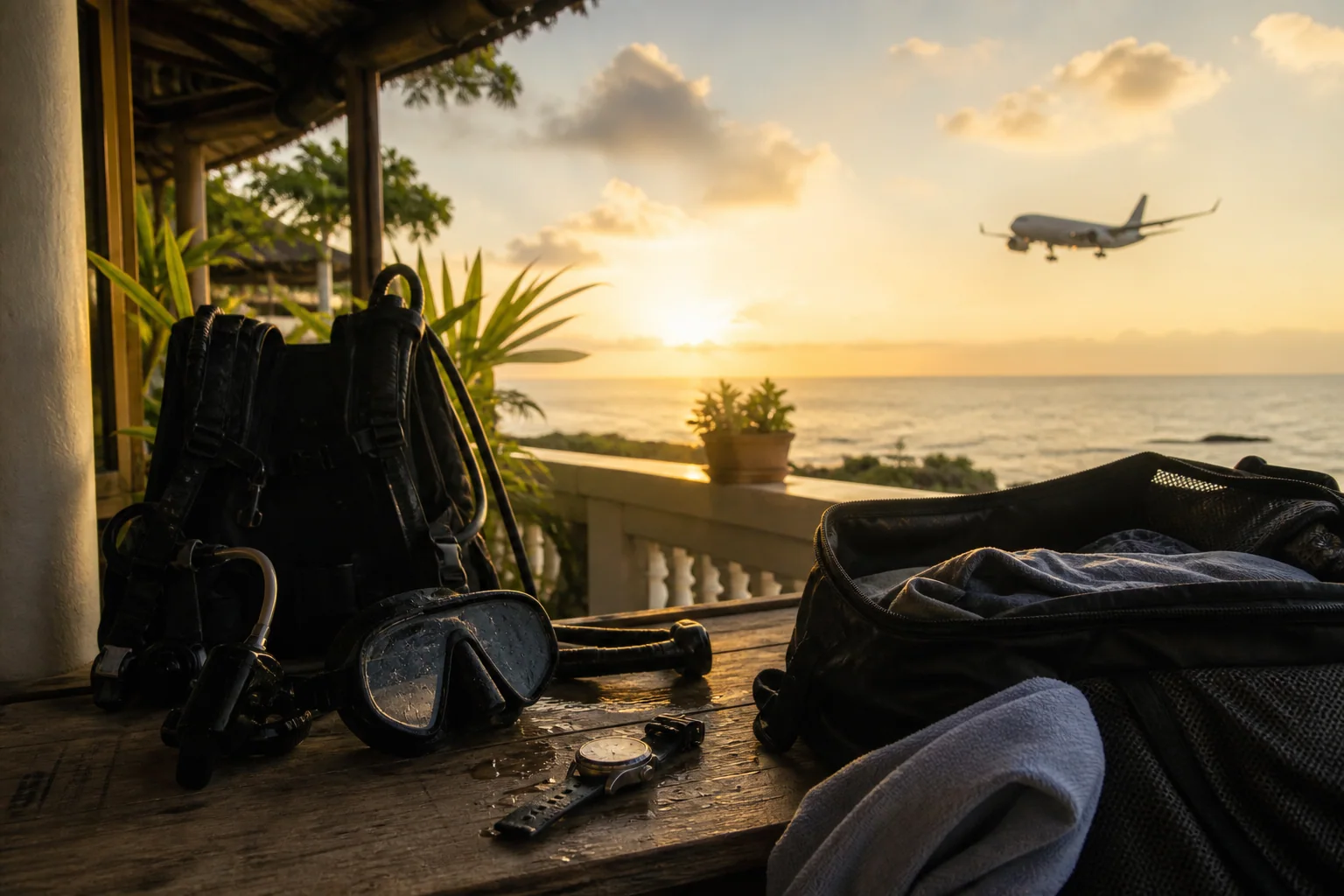
Ascending to altitude too soon after scuba diving increases decompression-sickness risk. Most commercial cabin pressure counts as an altitude exposure.
Use a final-night buffer in the multi-city flight guide and consider change costs with the flexible-ticket guide.
CDC minimum surface intervals
Wait at least 12 hours after one no-decompression dive, 18 hours after multiple dives or diving days, and 24–48 hours after a dive requiring decompression stops.
Practical checklist
- Record every dive profile.
- Include mountain travel above 610 m.
- Leave a longer interval when possible.
- Do not fly with possible symptoms.
Symptoms change the plan
Joint pain, numbness, weakness, balance problems, breathlessness or unusual fatigue require urgent medical assessment before any flight or ascent.
Continue planning
Frequently asked questions
After one no-decompression dive?
CDC recommends at least 12 hours.
After several dives?
At least 18 hours after multiple dives or diving days.
Does no symptom mean zero risk?
No. Minimum intervals reduce but do not eliminate risk.