Travel guide
Taking food and plants into the EU
Even a small snack can be restricted according to its ingredients and origin.
Prepared by the FlyVentis editorial team and regularly reviewed for travel and event accuracy.
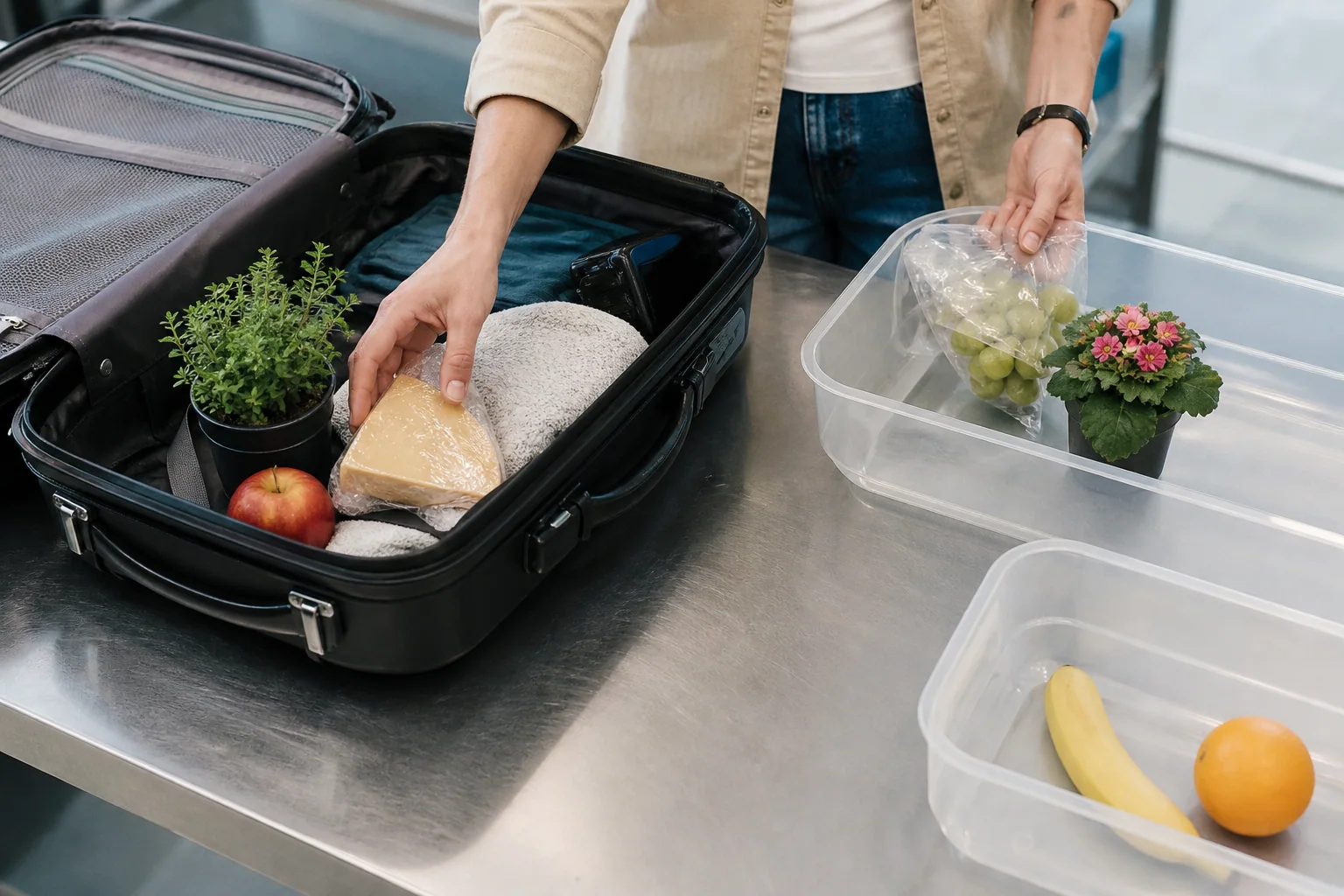
When entering the EU from a non-EU country, meat and dairy products in personal luggage are generally prohibited. Product-specific exceptions can apply.
An item allowed through aviation security is not automatically allowed through customs. Treat the carry-on guide and import rules as two separate checks.
Origin changes the rule
Personal-consumption movement within the EU is generally less restrictive, although temporary animal-health or plant-pest controls can apply. Entry from outside the EU has stricter limits and origin-based exceptions.
Practical checklist
- Read ingredients for meat or dairy derivatives.
- Record the product's country of origin.
- Check plant-health certificate requirements.
- Verify packaging and storage rules for infant or medical foods.
Declare when uncertain
Non-compliant products can be confiscated and penalties can follow national law. Ask destination customs rather than making an assumption.
Continue planning
Frequently asked questions
Can cheese be brought from Türkiye into the EU?
Meat and dairy from non-EU countries are generally prohibited in personal luggage; check current exceptions.
Can plants require a certificate?
Yes. Many plants and plant products require a phytosanitary certificate.
Does duty-free purchase remove the rule?
No. The destination's import rules still apply.