
Flight tips
Reducing blood-clot risk on long journeys
Risk is low for most travellers; individual risk factors and prolonged immobility matter together.
Prepared by the FlyVentis editorial team and regularly reviewed for travel and event accuracy.
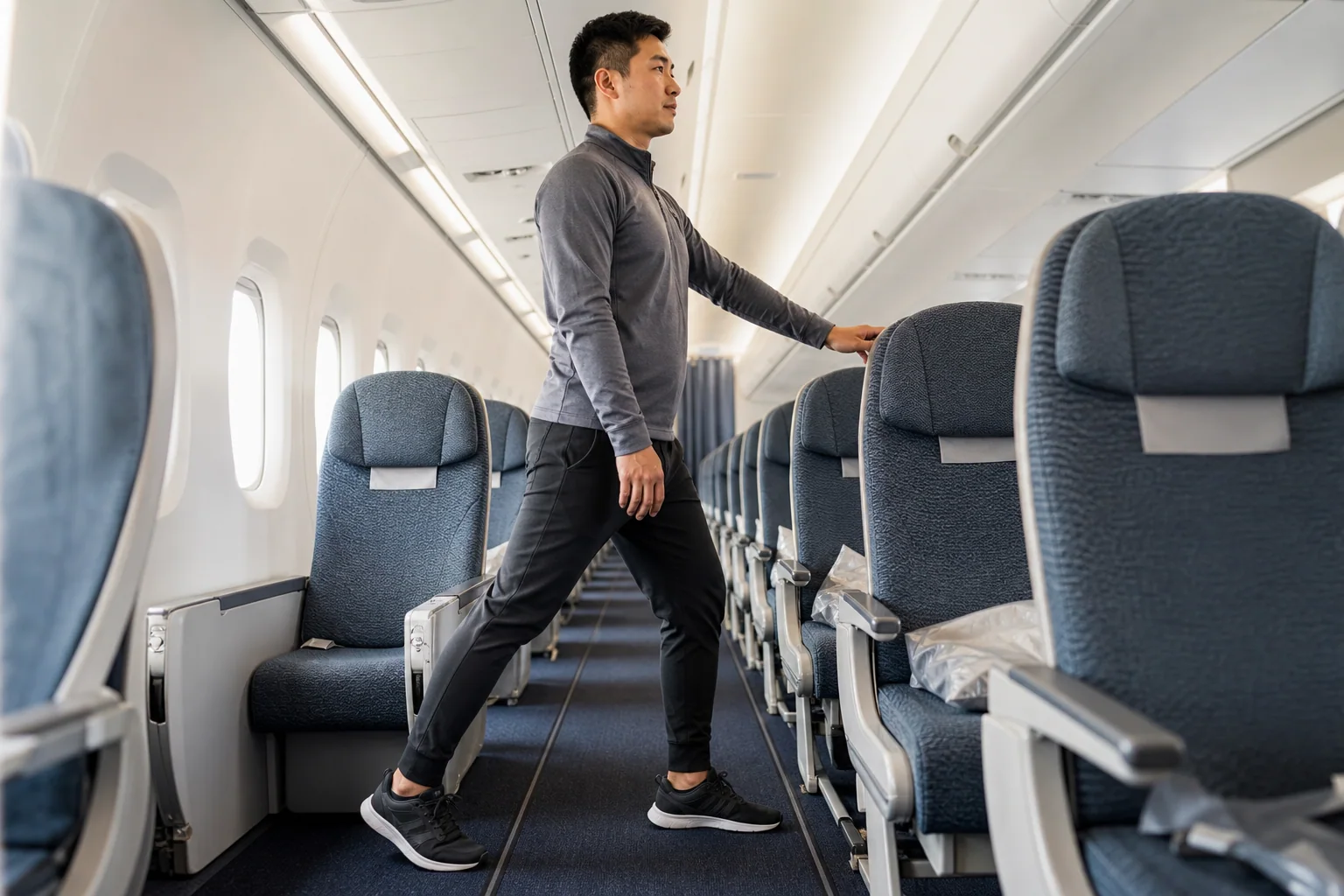
Remaining still for more than four hours on a plane, train, coach or car journey can contribute to blood-clot risk. Most affected travellers have additional risk factors.
Pair this with the long-flight guide and choose easier movement using the seat guide.
Discuss personal risk
Previous clots, recent surgery or injury, active cancer, pregnancy and postpartum status, oestrogen medicines and limited mobility can raise risk.
Practical checklist
- Walk at regular intervals.
- Exercise calf muscles while seated.
- Consider an aisle seat for easier movement.
- Use medication or compression only on individual advice.
Recognise urgent symptoms
Unexplained one-sided swelling, pain, warmth or discolouration can indicate DVT. Sudden breathlessness, chest pain, coughing blood or fainting needs emergency care.
Continue planning
Frequently asked questions
Is every four-hour trip dangerous?
No. Overall risk is low for most people and depends on individual factors.
What is the simplest preventive step?
Avoid prolonged immobility through walking and calf exercises.
Does everyone need compression stockings?
No. Suitability and fit should be assessed individually.